
Organic Wine Week
Highwire Conversion in the Vineyard
As a certified organic estate, every decision we make in the vineyard has to benefit more than just the vine, it has to work for the soil, the surrounding ecosystem, and the animals we share the land with. Our experimentation with a highwire trellising system is one of the clearest examples of that thinking in practice.
We’re proud to say that after four years of trial and error our vineyard team have successfully pruned and trained a further 2.8 hectares of vines onto the highwire system, taking our total area under conversion to 4.14 hectares. For each vine, the team either selects a new cane and trains it up to the taller trellis height or chooses a strong shoot from the end of last year’s cane, unwrapping and standing it up, then tying down a ready-made, hopefully fruit-bearing cane for the coming season. It’s slow, hands-on work, done row by row, vine by vine, but it’s setting up the vineyard for a different way of farming.
Grapevines are natural climbers and when left to their own devices, they’ll scramble up anything within reach, chasing light. Conventional trellising fights that instinct, keeping the vine low and compact so it’s easier to manage with machinery. Highwire does the opposite, it channels the vine’s own climbing habit, training the canopy up and out to a much taller wire.
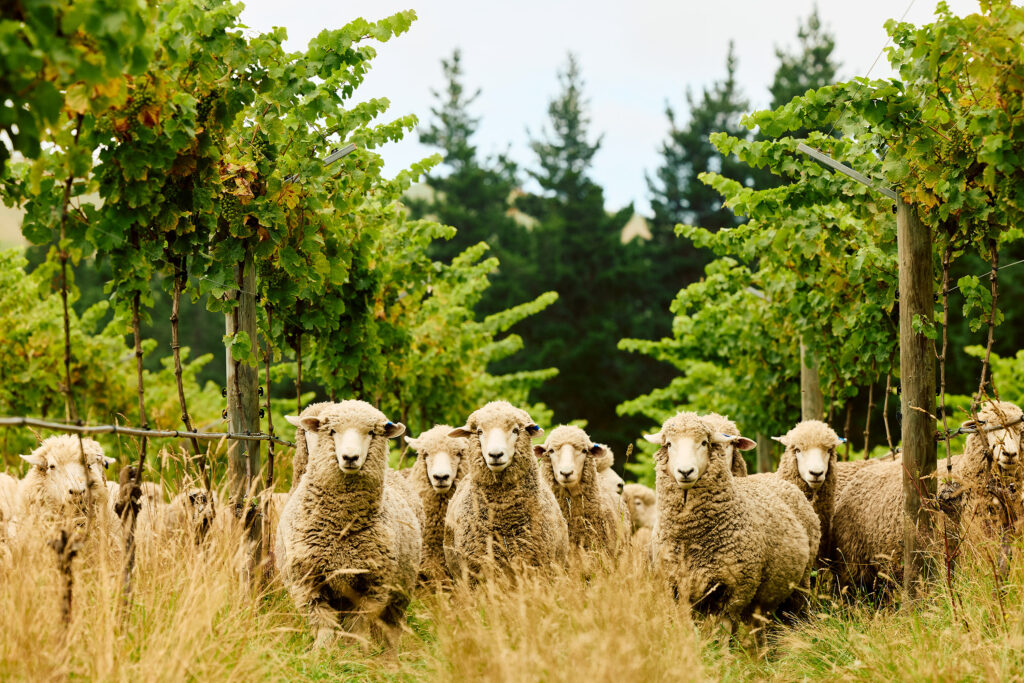
That height is what makes the rest of the system possible. With the fruiting zone lifted well out of grazing reach, we can run sheep through the vineyard year-round, using the flock instead of tractors and mowers for undervine and inter-row management.
The impact reaches further than the vine rows themselves. Replacing regular mowing and undervine cultivation with grazing sheep cuts our tractor-related emissions by roughly 50%. Fewer tractor passes also means significantly less soil compaction, which matters enormously for an organic vineyard, compacted soil restricts root growth, limits water infiltration, and disrupts the microbial and fungal life that healthy, living soil depends on. On top of that, the sheep themselves become part of the nutrient cycle: their manure breaks down and returns nitrogen straight back into the soil. And once their work in the vineyard is done, they make their way to our restaurant. We butcher in house and use the prime cuts on our menu, and every bit of the trimmings goes into other products like sausages, ensuring nothing is wasted.
It’s a system that works with the vine’s own instincts rather than against them and, just as importantly, it works with the land rather than against it too.
We have seen the results in this conversion of 3 vintages from the original high-wire block. Try our 2023 ‘Block 7’ Pinot Noir, use code OWW to receive 15% off your order!
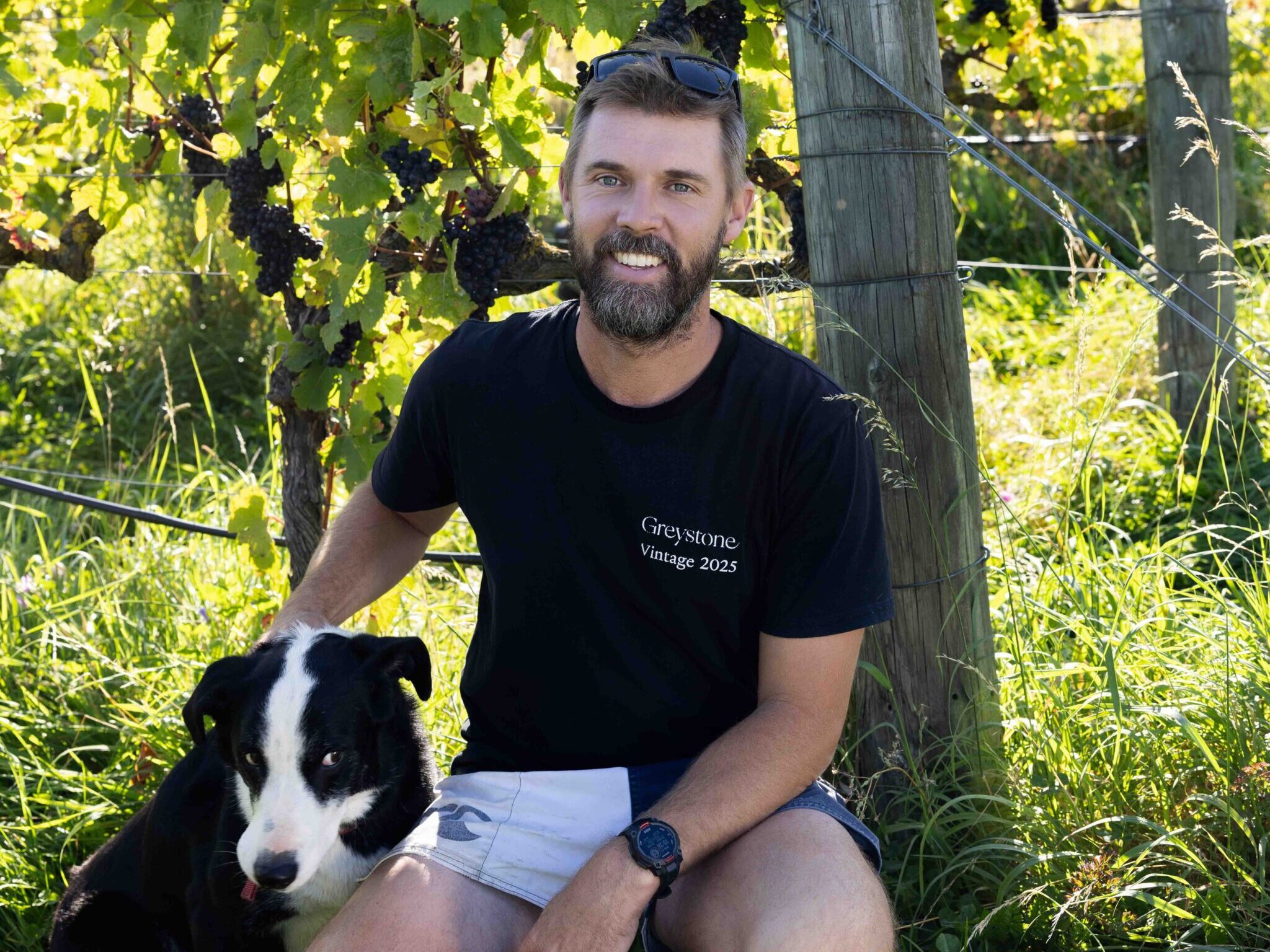
We sat down with Liam Burgess, our Vineyard Manager, to find out more
Take us back to winter 2021, what made you want to try the highwire system here at Greystone?
Primarily, the goal was to see if we could develop a system that would lower growing costs whilst incorporating a resource that we have abundant access to here in NZ, sheep.
This system is known elsewhere as the “Watson Trellis”; where does that name come from, and what drew you to it in the first place?
The Watson trellis originated in Texas and is designed to shade the bunches from the harsh Texan sun. We picked this idea up from a place in California called Paicines Ranch, where they were combining the Watson Trellis with year-round sheep grazing to manage the vineyard floor.
Can you explain simply what you’re actually doing to the vines this winter?
Normal winter pruning is designed to control the growth habit of the vine and establish the desirable vine architecture for the coming season. With the conversion process, we are leaning into the concept of grapevines being natural climbers.
Having the fruit up at that height, what benefits does that bring?
Conventional wisdom suggests that every metre of height gained equates to 1 degree of warmth during a frost event, whilst we haven’t seen evidence of this, there is a minor warming effect with a taller trellis. We also see a reduction in humidity being higher off the vineyard floor.
Asides from the height gain, the reduction in tractor and machinery passes leads to a reduction in carbon emissions from diesel engines, a reduction in soil compaction and an increase in nutrient recycling through the sheep manure breaking down and returning nutrient back to the soil.
You’ve said grapevines are natural climbers, does highwire just let the vine do what it wants to do anyway?
In a manner of speaking, yes. What we are trying to do is embrace the vine’s natural propensity to climb by extending the fixed structure of the vine. The benefit in doing this is that by having a greater volume of woody tissue (trunk and branch structure) we can create a larger carbohydrate store within the plant. It is this stored carbohydrate energy that the vine relies on for its energy and growth during the first 30-40 days of the season.
You’re going from 1.35 to 4.14 hectares, what gave you the confidence to commit to that scale?
It’s less about scale and more about process. Having 3 vintages of wine tucked away from the initial block conversion, we can safely say now that we are happy with the quality of wine it is producing and we have confidence in the process.
The post mentions more sheep grazing the rows in future, how does that fit into the bigger picture here?
Ultimately for us it is about incorporating livestock into the vineyard more and more.
Our woolly friends make great lawnmowers/weed eaters whilst contributing to overall soil and plant health without the annual R&M costs associated with large machinery.
The more we can incorporate livestock into the processes the better the outcome for us as a business, the consumers and the environment.
